19 September 2016

This Is Not A Drill: Pizza Hut® Unleashes Latest Cheesy Goodness In All New Grilled Cheese Stuffed Crust Pizza

Grilled Cheese. Good. Original Stuffed Crust® Pizza. Good. Grilled Cheese Stuffed Crust Pizza? REAL GOOD.

In a pizza that needs little explanation, the newest Pizza Hut mash-up combines two of the most beloved foods of all-time – grilled cheese and pizza.


The Grilled Cheese Stuffed Crust Pizza features extra gooey cheddar and mozzarella cheese stuffed in and baked onto the crust. To finish off the grilled cheese crust, it is topped with toasted breadcrumbs and melted butter for the ultimate grilled cheese experience. A large one-topping Grilled Cheese Stuffed Crust Pizza is available beginning Sept. 19 for just $12.99.

"The Grilled Cheese Stuffed Crust Pizza is the perfect combination of a classic grilled cheese and a traditional pizza," said David Timm, chief marketing officer, Pizza Hut. "The result is a delicious, flavorful and indulgent pizza that packs the punch of a gooey, cheesy, crunchy grilled cheese."

Cheese is rapidly becoming one of America's favorite foods. Related, pizza is often ranked as the most popular food in America. To round out the equation, grilled cheese has been pegged as one of the most comforting foods ever imagined. Now, all of these "favorites" can be enjoyed as one.

The Grilled Cheese Stuffed Crust Pizza can be topped with any one of the following fresh Pizza Hut ingredients: Fresh mushrooms, fresh spinach, fresh red onions, fresh green bell peppers, sliced banana peppers, sweet pineapple, sliced jalapeño peppers, Mediterranean black olives, Peruvian cherry peppers and diced Roma tomatoes as well as pepperoni, Italian sausage, premium salami, classic meatballs, slow-roasted ham, hardwood smoked bacon, grilled chicken, beef and seasoned pork. Pizza lovers can customize their pizza with a choice of five sauces, including Classic Marinara, Premium Crushed Tomato, Creamy Garlic Parmesan, Barbeque and Buffalo. They can also top their pizza with a choice of sauce drizzles, including Balsamic, Barbeque and Buffalo. 

18 September 2016

FAO: The Shark Fin Soup

In the Seychelles, sharks are considered prone to over-exploitation and population collapse due to their life history characteristics. As highlighted in the Seychelles NPOA Shark 2007, the shark stocks of Seychelles, like many around the world in recent years, have been the subject of concerns to the sustainability of current exploitation. The practice of “finning” in the past was common. But today, shark finning has been shown as a non-sustainable practice. Today, this practice is almost completely abandoned on board. However, Seychellois think that efforts should continue. Seychelles authorities approached SmartFish programme for a support to develop awareness raising on the national situation in Seychelles, where there is still a danger that coastal sharks species that are targeted for finning.

16 September 2016

FSC Mauritius: Investment Banking Licence – FS-6.1

An Investment Bank holding an Investment Banking Licence and regulated by the Financial Services Commission (FSC) will be exempt from corporate tax for 5 years in Mauritius. 

An Investment Bank may by way of business engage, in one or more of the following activities:
  1. Investment Dealer (Full Service Dealer including underwriting);
  2. Investment Adviser (Unrestricted)
  3. Investment Adviser (Corporate Finance Advisory);
  4. Asset Management;
  5. Distribution of Financial Products; or
  6. such similar activities as may be approved by the FSC
Application Form
Licensing Criteria
FSC Processing Fee: MUR 100,000 [approx USD 3,200]
FSC Fixed Annual fee: MUR 300,000 [approx USD 9,600]
Minimum Stated Unimpaired Capital: MUR 50,000,000 [approx USD 1.6M]

OIL: The Super Set

Of the various forces that have buffeted offshore financial services in recent years, regulation and emerging demand bases are probably the most significant. These forces have guided investors to particular jurisdictions with increasing regularity, altering – but not necessarily redrawing – the map. Indeed, certain locations achieved a pre-eminence within the industry, and for characteristics that are a direct response to offshore demand, that it calls into question the applicability of the term “offshore.”

WISeKey to Launch a Blockchain Center of Excellence in Mauritius to Develop a Blockchain Platform

WISeKey International Holding Ltd, a leading cybersecurity company, during its participation at the Mauritius Investment Board Blockchain event, announced its intention to establish a BlockChain Centre of Excellence in Mauritius to deploy a Trusted Blockchain as a Service platform, to assist the Mauritius Government to create a Blockchain Ecosystem.

WISeKey will work with experts from industry, government, and academia to address businesses’ most relevant blockchain developments with practical, standards-based solutions using available blockchain technologies. This dedicated center of excellence will conduct research, rapid pilot prototyping, co-creation of use cases and IP creation on blockchain technology and platforms. The Mauritius BlockChain Centre of Excellence will recommend a National Blockchain Platform to facilitate enterprises to swiftly adopt and on-board blockchain based solutions and services.

The Mauritius Blockchain Center of Excellence will help position the country as a key and active player in the blockchain space. It will provide access to both policy, technical and business expertise around blockchain. WISeKey will be cooperating with local companies participating at the center on building points of view, proof of concepts, policies, educational materials including addressing all the distributed ledger capabilities across different blockchain schemes (public, consortium and private), with industry verticalization and domain specialization (IoT, transactions, messaging, etc.), underpinned by the best underlying technologies from startups, our key partners and from the community.

Carlos Moreira, Founder and CEO WISeKey said: "We strongly believe that the Blockchain Center of Excellence will disrupt business flows and processes across different industries in Mauritius and will position the country as one of the Blockchain Platforms and Hubs."

WISeKey will be localizing in Mauritius at the development of the WISeID Blockchain which is constantly growing as new blocks are added to it with a new set of recordings. Each WISeID node gets a copy of the WISeID Blockchain and gets downloaded automatically upon joining the WISeID network. Through the WISeID BlockChain app users are always in control of their digital identity stored on their mobile, IoT sensor and or computer and is only the user who determines which identification attributes are shared with social media, credit cards, merchant sites etc. never disclosing the Personal Identifiable Information (PII) if not required or necessary. WISeID uses BlockChain as a public, immutable ledger that allows third parties to validate that the original Identity or Attribute certifications provided by a Third Trusted Party has not been changed or misrepresented. Keeping control of Digital Identity is key to protecting user’s personal data.

The Mauritius Event: The next Blockchain Valley

Organized by Board of Investment (BOI) of Mauritius

The Board of Investment (BOI) is the national investment promotion agency of the Government of Mauritius with the mandate to promote and facilitate investment in the country. It is the first point of contact for investors exploring business opportunities in Mauritius and the region. BOI also assists investors in the growth, nurturing and diversification of their business.

BOI Announcement:

BMPL Ebene Cybercity has today been the scene of a historical landmark in the shaping of our digital economy.

The very first seminar on Blockchain exceeded our expectations with overwhelming appreciation from the audience. More than 200 stakeholders across various sectors, including Banks, Assets Management, Insurance, Tourism, ICT and entrepreneurs from over the world attended the seminar.

As an indication, investments in bitcoin and Blockchain infrastructure have already topped USD 1 billion, and every major bank in the world is increasingly paying attention to this technology.

The seminar saw the participation of renowned international speakers who intervened on diverse themes, namely demystifying Blockchain, developing its ecosystem, its regulatory framework and the potential applications of Blockchain in today’s innovation-driven economy.

Mr. Carlos Creus Moreira, Chairman, CEO & Founder of WISeKey made a clear presentation of Blockchain technology. He highlighted the differences between Blockchain and other technologies such as cloud computing, and expanded on the potential in creating revolutionary solutions which do not exist in the marketplace today.

Mr. Sébastien Couture, co-founder of Stratumn, demonstrated how Blockchain builds consensus around multiple institutions, enterprises and individuals working together by eliminating the role of the middleman and improving efficiency while at the same time improving trust between all the parties.

His colleague, Mr. Anuj Das Gupta, Head of Research at Stratumn, elaborated further on the subject by discussing the potential applications of Blockchain, including in KYC systems and Smart cities. He also suggested that Blockchain technology could be used in diverse sectors such as energy and healthcare.

We also had the pleasure of listening to Ms. Primavera de Fillippi, Researcher at Centre National de Recherche Scientifique, who elaborated on the need for a shift in the regulatory mindset, moving from a bureaucracy base, friction and permission (permission-based rules) to one based on accountability, transparency and innovation (information-based rules) in a bid to reconcile the objectives of providing comfort and security to users while ensuring that regulations do not stifle innovation.

Finally, Mr. Larry Christopher Bates, Chief Security Officer and President of Bitland Global, suggested that Mauritius can become the “Blockchain Valley” through the advent of a cyber-security Hague for international data-houses. He maintained that this will inevitably contribute to economic growth.

Blockchain as a technology is here to stay. The onus remains on us to harness its advantages and leverage them for the benefit of Mauritian businesses, consumers and the Government. In addition, Blockchain KYC’s efficiencies and cryptographic protocols deliver stronger security and faster compliance with reduced operating costs.

The seminar has set the scene for this technological revolution. We now have to develop the Blockchain ecosystem, including devising an appropriate regulatory framework, build the local manpower and encourage both public and private sectors to integrate the technology in their structures to trigger a new phase of efficiency led by the growth of their ventures.

A small country, Mauritius has the potential to rapidly implement Blockchain in day-to-day business.

Far from being the end, this is rather the dawn of a new beginning. We will follow up on this seminar with another one in a few months. The objective is to maintain the momentum, attract more global players and position Mauritius as a trusted and secure platform in the region for the deployment of Blockchain technology.

Already, WISeKey and Bitland have indicated that they are considering setting up operations in Mauritius.

This can only bode a bright future for the next ‘Blockchain Valley.’

15 September 2016

Nissin Foods® USA Makes a Historic Recipe Change to Improve its Iconic Cup Noodles® Product Lineup

Today Nissin Foods, the inventor of instant ramen, announced a significant recipe change for its iconic Cup Noodles brand in the U.S. For the first time in its recent history, the beloved noodle brand is taking a step forward in improving its nutritional makeup by reducing sodium, removing added MSG and removing artificial flavors. Celebrating the 45th anniversary of Cup Noodles, Nissin is making thoughtful nutritional changes to its product while maintaining a great taste fans love – all at the same, affordable price.

"Listening to our consumers has always been at the core of what our company, and the Cup Noodles product in particular, was founded on," said Al Multari, president of Nissin Foods USA. "Most recently, we asked our consumers what changes they'd like to see in our Cup Noodles product. They told us that without sacrificing taste, the three most compelling changes we could make to our recipe were: lower sodium, no added MSG and no artificial flavors. This is exactly what we've been able to accomplish. Our consumers rely on Cup Noodles as a convenient, affordable and quality meal to help keep them going – and now, they can feel even better about eating it."

For almost 60 years Nissin has offered innovative, satisfying products with a wide range of flavors. Invented in 1958 by Momofuku Ando, who was inspired by the hungry masses he witnessed after World War II, ramen has become an affordable, delicious quality meal or snack that consumers love. Keeping the importance of taste and cost in mind, Nissin challenged its research and development team to accomplish the task to help address today's modern preferences for this ramen product.

After a series of blind taste tests with people who frequently consume the product, results revealed that consumers liked the new version of Cup Noodles just as much as the current. Nutritional changes include:
  • A reduction of more than 20 percent in the sodium content of the three best-selling flavors, and a reduction of approximately 15 percent in sodium content of all flavors
  • Removed added MSG (but contains small amounts of naturally occurring glutamates in ingredients such as soy sauce, tomato and red chili pepper)
  • Removed all artificial flavors and added natural ingredients (such as turmeric, paprika and lime)
Nissin is committed to providing its consumers with a delicious, affordable meal and is constantly evolving its products to align with consumer preferences. With this recipe change, consumers can be assured that they are receiving a product that meets their expectations of a delicious taste and an improved nutritional recipe.

Consumers can now find the new product on store shelves nationwide. With this new Cup Noodles lineup, the brand will also launch its first-ever U.S. national advertising campaign in November 2016.

Behind-the-Scenes Video of New Cup Noodles Recipe:

Bedell Trust announces completion of management buyout and wins 'Trust Company of the Year' at annual STEP awards

Bedell Trust, the leading award-winning provider of corporate, fund and fiduciary services, is pleased to confirm that the management buyout ("MBO") announced earlier in April 2016 has successfully received all regulatory approvals and completed on Monday 12th September. Backed by leading independent private equity firm Inflexion, the transaction means that with immediate effect, Bedell Trust and Bedell Cristin are now two separate businesses.

Nick Cawley, who will continue to lead the newly independent business as Chief Executive Officer, commented:

"Bedell Trust has witnessed accelerated growth in recent years and we anticipate this growth will continue. From our clients' perspective, there will be no change to the management team or their existing relationship contacts and we remain firmly committed to providing best in class service. Indeed, we believe our MBO will help create an even better platform to further build our offering to clients.

We are delighted to be partnering with Inflexion, who have a compelling background in supporting the strategic aspirations of financial services sector businesses similar to ours and we are confident that we are working with the very best partner.

This next exciting stage of our evolution has only been made possible because of the support provided by the continuing management team of Bedell Trust and the partners at Bedell who both helped build and subsequently grow Bedell Trust into the successful and dynamic business that it is today."

Florencia Kassai, Partner at Inflexion said:

"This is an exciting time for both Bedell Trust and Inflexion. Bedell Trust is renowned for great client service and underpinned by a highly credible reputation and we are committed to supporting Bedell Trust in achieving their strategic aspirations across each of the strongly growing markets in which they operate. This partnership is based on the shared vision of building a business for the long-term, utilising our sector expertise, capital and ambition. We firmly believe Bedell Trust will emerge as the leading player in the corporate services, fund and fiduciary administration sectors".

In addition to completing the MBO, Bedell Trust has also been recently recognised as the 'Trust Company of the Year' at the prestigious 2016/2017 annual STEP awards. This is the second time in recent years Bedell Trust has achieved this award which is seen as one of the preeminent accolades within the global private wealth industry.

Bedell Trust has over 250 employees and operates from Jersey, Guernsey, London, Luxembourg, Dublin, Singapore, Mauritius and Cayman.

Advisers involved in the MBO transaction included:

For Bedell Trust - Macfarlanes and Bedell Cristin (Legal), Wyvern (M&A), Alex Picot (Structuring, Tax), KPMG (Compliance Due Diligence), Cooper Gay (Insurance)

For Inflexion - KWM and Mourant Ozannes (Legal), Deloitte (Financial Due Diligence), Jardine Lloyd Thompson (Insurance)

Offshore Pilot Quarterly (September 2016, Volume 19 Number 3)

Preamble

September’s quarterly mostly comprises extracts from the speech which I gave this month at Jesus College in Oxford when the 26th annual symposium, organised by Offshore Investment magazine, was held. Regular readers will be familiar already with the key themes and thoughts interwoven into the text. History, however, takes a back seat this time, despite my belief, like Winston Churchill had, that “a good knowledge of history is a quiver full of arrows in a debate”.

Despair and Extinction

Every year James Ward puts on the Boring Conference. What are some of the topics? One talk was about sneezing and another about electric hand-dryers. This is most certainly not a symposium about boring things as you have already discovered. James says that the trick to giving a boring speech is that even if the title is breathtakingly bland, like mine, the content shouldn’t be. I will attempt to meet his standards.

In 2013 here in Oxford I quoted Woody Allen, that sage of the cinema, at the start of my talk. I felt it appropriate. Regrettably, I still do. “More than any other time in history, mankind faces a crossroads. One path leads to despair and utter hopelessness, the other to total extinction. Let us pray we have the wisdom to choose correctly”.

Having said that, the optimism was palpable concerning Brazil three years ago and with the demise of Hugo Chávez that year a ray of light shone momentarily that Venezuela might emerge from the political pit which it had fallen into. Today the Brazilian basket case is all too apparent to see by everyone and rather than the Olympic Games, it is the political fun and games that most Brazilians are focused on. As for Venezuela, that pit has just got deeper.

Argentina, however, appears to have found a saviour and Perú a wise head on old shoulders, but as for Venezuela, Nicolás Maduro, an ardent Hugo Chávez acolyte, who is now president, has not secured a firm political footing; quite the opposite, he seems to be caught in quicksand with just one inevitable result as he flails his arms. The likes of Argentina have cast off the yolk of leftist dogma. Mauricio Macri, a right wing business tycoon, and Argentina’s new president, in the first two months in power had more than 27,000 civil servants fired; duties on mining exports have been removed and state subsidies on essential services have been lifted. We’re talking macri economics versus macro economics. He is sweeping clean after the populist rule by Cristina Fernández and her late husband, Néstor Kirchner. Macri may have been president of Boca Juniors football club in Buenos Aires for 12 years but he has no intention of playing ball with the old political establishment. Further north and for the first time in over a decade a Venezuelan president, in this instance Nicolás Maduro, a clone of Hugo Chávez, is confronting a first ever opposition-controlled parliament. And President Rafael Correa in Ecuador has faced staged mass protests by the country’s indigenous and workers movement.

But despite politics and economics representing a seesaw on the subcontinent, one which has no handles to hold on to, the region continues to play a more international role so understanding the Latin psyche will become increasingly relevant for both businessmen and those foreign professionals who see the subcontinent as a new and profitable frontier.

Machiavelli speaks of the unremitting malice of fortune; certainly the economies across the world have been, and continue to be, hostage to it. None more so than those in South America. It’s biggest economy, Brazil, is experiencing a recession with such a ferocity not known in more than three decades, some say ever, and with the accompanying political pantomime only in the first act, there is no clear end in sight: whose legs are guiding the pantomime horse?

Brazil’s economy is far from solid: more like the consistency of a soufflé with street protestors demanding “More Argentina, less Venezuela”. In June the government reported that GDP had contracted 0.3 per cent in real terms in the first quarter of this year and it is 5.4 per cent smaller than it was a year earlier. The country has an interim president whilst Dilma Rousseff battles impeachment charges which may have been resolved or not before I deliver this talk. Economic and political uncertainty permeates every corner of society. A poll released in April showed that 63 per cent of respondents across this huge country described Dilma Rousseff’s government as “bad or terrible”. 

Michael Temer, the interim president, like President Macri, wants to introduce sensible economic policymaking. Public spending is a challenge, not to mention reforming archaic labour laws and the Byzantine tax code. All very well, but the interim president has himself been implicated in past corruption scandals and who is a constitutional lawyer having been a congressman since 1987. Let’s just hope that his own personal constitution can handle the heat.

In 2015 the economy shrank by 3.8 per cent, its worst annual performance since 1981. Inflation was nearly 11 per cent at the end of last year, a 12-year high, and unemployment reached 9 per cent. GDP is expected to decline by a similar rate as it did in 2015. Unemployment and inflation is expected to continue to rise, just like the anger of the people who, not unlike many citizens in the West, have become acutely aware of the demarcation line between themselves and the rich.

This is a country with a government that needs to refer to a dictionary to grasp the clear meaning of efficiency. A survey in June published by IMD, a Swiss business school, placed Brazil last out of 61 countries in the efficiency of its government, and behind, would you believe it, not only war-torn Ukraine, but venal Venezuela.

I’ll be returning to general developments but as wealth generation is today’s focus I want to look at wealth creation in Latin America. To do so requires a glance at history to understand that much of the wealth in Latin America is rooted in old wealth created by and concentrated in a few families. I have included an essay entitled “Latin America: into the mainstream” in my working papers which will give a taste, a feel of this vast region’s people via its history, past isolation and culture.

The countries comprising Latin America, not dissimilar to Europe, bar less languages, are distinct. Just like Cinderella’s ugly sisters, therefore, one size of shoe does not fit everyone, anymore than it does in Europe.

A Proud People

Latin America has left obscurity behind with a new sense of strength and confidence. The controversial Cecil Rhodes who looks down upon us from Oxford’s Oriel College and is the founder of the country where I spent my youth, said that “to be born an Englishman is to win first prize in the lottery of life”. Students have protested about the era he represents and their protests are but one more symptom of the current awareness of the chasm between the prosperous and the poor which has created a bias and suspicion regarding offshore centres and their uses, especially concerning taxes.

The peoples of South America share Rhodes’ sentiment in the love of their own particular country, if not his imperialism. Of course, we all share universal values and so Latins are not aliens from another planet. Their basic objectives and needs are just the same as ours; it is only that their priorities may differ to some extent from our own. 

According to Julius Bär, Latin America is the fourth largest wealth region in the world. The middle class has expanded along with the region’s economies and this new base of consumers has meant profit for the wealthy enterprising businessman.

In 2014 the population of billionaires grew by 38 per cent, from 111 to 158; that was the fastest rate than anywhere else in the world, including Asia. A large number live in Brazil, Mexico, Chile and Peru, in that order. Carlos Slim from Mexico, the telecommunications tycoon with heavy investments in real estate and a variety of industries, was once the richest man in the world, but he still heads the Latin American list.

It is important to consider each country’s governance – even if politically the picture is good. Latin America, for example, has issues surrounding transparency, legality and fairness. Investors - be they individuals or multinational companies from abroad – have to accept the differing levels of enforcement of those three factors across the region. In particular, for commercial or industrial enterprises it is possible that any litigation that arises could take years to resolve. In this regard, Brazil remains near the bottom of the World Bank’s index for ease of doing business in Latin America; already its complex tax code and labyrinth of regulation presents a daunting challenge. Brazil has been known to have had, for instance, over 23,000 changes in its tax system in one year.

At the end of the day, for the South American businessman, his objectives and needs usually come down to protecting his assets and ensuring that his wealth remains in the family while agreeing with Anton Chekhov that every person lives his real, most interesting life under the cover of secrecy. The Common Reporting Standard is, therefore, an anathema, a threat to this code of secrecy.

If there is an unwillingness to place much reliance on governments, there is an equal degree of scepticism regarding the law. In looking at the justice systems it is perhaps wise to remember the words of the Greek statesman and poet, Solon: “Laws are like spiders’ webs: if some light and powerless thing falls into them, it is caught, but a bigger one can break through”. That sounds appropriate when considering America’s co-operation with the Common Reporting Standard. [Please see September’s Latin Letter].

Business (Not) as Usual

The fall out between the United Kingdom and the European Union reminds us that Latin America doesn’t claim sole rights to enormous sudden political shifts. Old-order politics, not just in Latin America, are being increasingly criticised and shunned by electorates. Similarly, citizens worldwide are expressing resentment over tax dodgers, voicing loudly their aversion to evasion which has often been linked with the very wealthy, a group during this period of changing political and social trends, seen to be the real benefactors of liberal capitalism and which because of that, have made the Panama Papers poisonous, a subject I have included in my conclusion. The average CEO in the US earns 335 times the wage of the average worker.

What of external affairs that affect Latin America? America’s populist leanings concern Latin America. Meanwhile, China – and it is both China and the US relations with Latin America that carry most weight – continues, as it always has, to maintain its impassive Sphinx-like stance. The rise of China in Latin America versus the weakening of the US influence that is closer to just treading water, is common talk these days but we should remind ourselves that the region with its population at over 600 million is an important trade area for US-based companies with US producers exporting over three times as many products there than to China. If you exclude Mexico, Central and South America have purchased over 50 per cent more goods from the US than China.
Conversely, it has traditionally been South American commodities that the Middle Kingdom has centred its relationship on. This, however, is changing.

It should be remembered that Canada (first) and Mexico (third) are America’s leading trade partners and together count for around 40 per cent of US global commerce. In Mexico’s case, it is responsible for about 60 per cent of all US trade with Latin America.

Last year, before Brazil’s fall from grace, the two Latin countries which were the economic powers in terms of GDP were Mexico and Brazil; Colombia can be included, with reservations, due to its encouraging economic development and expanding economy.

Brazil with its continental size and a population exceeding 200 million is an attractive trade partner whereas Mexico has two advantages: its proximity to the US and the key role it has in the North American Free Trade Agreement with the US and Canada. The tres amigos, a Spanish spin on describing the countries’ leaders, met this June in Canada when President Obama was emphatic that a Trump presidency would not derail their crossborder ties. This was the US president’s final NAFTA summit meeting.


A day before the summit, however, Donald Trump lambasted the NAFTA treaty, calling it a disaster. No friend of Mexicans, threatening a wall, reminiscent of former East Germany, to keep them out, Trump has had his style of politics likened to that of dictators such as Hitler and Mussolini, who were also showmen, although far more dangerous, who also exploited the impoverished and disgruntled, and said what their audiences wished to hear. Mexico may be America’s next-door neighbour but, ironically, it could wind up being, philosophically, more distant from it than Chile’s Tierra del Fuego if a president Trump followed through on his threat and goes after NAFTA.

Going to Shell in a Basket

“Politics and Principles: A Man’s Need to Blush”, which is the title of this month’s Latin Letter, contains the essence of the remainder of the speech and will help you understand the significance of these words written by Adam Szubin, acting undersecretary for terrorism and financial intelligence, Department of the US Treasury: “But there is a money laundering method that is less exotic yet every bit as dangerous: shell companies incorporated in the United States”. It is a method, of course, ideally designed for tax evasion as well.

Offshore Pilot Quarterly (independent writing for independent thinkers) has been published since 1997 by Trust Services, S. A. and is written by Derek Sambrook

Latin Letter (September 2016) - Politics and principles: A man’s need to blush

The 2016 Latin American Economic Outlook, published by the United Nations and the OECD, records that China, based on 2014 statistics, is the second-biggest user of the Panama Canal after the US, accounting for 23.5% of the cargo transported.  China’s foreign direct investment in Panama, with a population of less than 4 million, has averaged USD106 million over the last few years, focusing on ports, shipping, banking and commerce.  This was all before the canal expansion project when in June two new locks came into operation which are expected to double the canal’s capacity.  The larger ships, known as “Neo-Panamax” which can now pass through the canal, are able to each carry amounts of cargo that would (approximately) require the equivalent of 18 trains, or 5,800 trucks, or 570 cargo aeroplanes.

14 September 2016

Mauritius: Launch of new African office to support Nixxis’ international growth

Nixxis is pleased to announce the opening of its new head office in Mauritius. Nixxis will use this new location to expand operations across the African and Asian regions, engage closer with customers and encourage businesses in these booming economies to adopt the best contact center solution in the market.

"Nixxis is the fastest growing and most innovative software company in the industry. Our new office in Mauritius will allow us to be more effective in responding to the needs of our African and Asian customers and their future requirements”, according to Nixxis CEO Luc F. Jacobs.

Having a remarkable experience working with African and Asian companies, Nixxis supports a great number of customers, including banks, insurance firms, telemarketing call centers, e-commerce enterprises and BPO’s. Nixxis is assisting local contact centers with innovative solutions allowing them to automate their business processes, build strong customer relations and meet growing customer demands.

Analyzing market trends which have signaled a strong requirement for Nixxis services, the management team made an informed decision to establish ourselves in this exciting new location. Nixxis’ Mauritius office will offer customers in the region with the latest contact center technology and effective training programs to support projects of any complexity”, explains Head of Professional Services, Nicolas Boussaroque. “What specifically sets Nixxis apart from other producers is that we always provide more efficient, competitive and industry aligned products to enable superior customer experience.

Operating in a fast paced environment, African and Asian companies look forward to improve operational excellence and their demand for underlying contact center solutions is stronger than ever. Taking into account the specific market characteristics, Nixxis delivers its Contact Suite v2.3 which is perfectly scalable for the regional contact centers' needs enabling them to significantly increase customer satisfaction.

Nixxis starts a new facility in Mauritius to encourage the region’s continued economic growth by providing new business opportunities. We will help our clients to implement ultimate business solutions that will make them competitive enough to stand out in the market. We are glad to offer top notch software allowing African and Asian contact centers to remain at the forefront of their industries”, stated Luc F. Jacobs.

13 September 2016

Disrupting Africa: how businesses, policymakers, investors and start-ups can embrace new technology to transform the continent

A digital revolution is underway in Africa with growing affordability, accessibility and untapped demand driving rapid advances across the continent. Digital disruption is well placed to support future economic growth in Africa, but the reach and benefits of this growth need to be more evenly spread.

A new report by PwC, Disrupting Africa: Riding the wave of the digital revolution, identifies ways in which businesses, disruptors and policymakers can embrace new technology while providing the infrastructure and capacity needed to ensure digital disruption is genuinely transformational in realising Africa’s economic potential.

For mainstream businesses, making products and services cheaper, more accessible and easier to use will unlock technology for the “global emerging middle”, which PwC estimates will make up $6 trillion of the global market by 2021. With more than two billion consumers, the global emerging middle (annual income $996 - $3,945) sits just below the conventional middle class in income terms, but its aspirations for quality, high performing products are in sync with higher segments.

Joel Segal, chair of PwC’s Africa business group, comments:
Technological disruption is transforming markets and societies across Africa in ways that wouldn’t have been possible even five years ago. This opens up huge and largely untapped commercial potential for domestic and international businesses. From the demographic dividend of a young and rapidly expanding population, to the fastest growing middle class of any continent – Africa has the potential to become a new powerhouse of production and consumption in the 21st century, just as Asia was able to do in the late 20th century. 
By broadening their outlook, businesses can dramatically increase their pool of potential customers, as well as giving a large proportion of Africa’s population access to products and services that would have been beyond their reach before. 3D printing is already enabling the manufacturing of everything from prosthetic limbs and precision tools in remote locations.
Businesses and policymakers can use advances in technology to break down physical barriers, improving local knowledge, infrastructure and access to remote communities. 

Drones offer one solution: PwC is developing a fleet of surveyor drones to help clients monitor infrastructure, manage construction sites and carry out insurance assessments. The drones are also being used to support town planning for SmartCities, such as Lagos city council, by mapping building and land usage, formal and informal, in urban areas. The data collected will help local governments verify property ownership, improve postal services and collect taxes on unregistered properties.

Joel Segal says:
Drones offer opportunities for both businesses and government to accumulate and share data, combining resources to better estimate where populations are concentrated, areas where deprivation is most severe and consequently where to target investment and services. 
While delivery drones don’t tackle the underlying problem of Africa’s need for better roads and transport networks, they can deliver critical medicines to remote villages in Africa while surveyor drones play a part in finding a solution.
Governments can also use technology to strengthen trust and combat corruption. One example is through using Blockchain technology which creates a permanent and unchangeable record of every transaction and information exchange between different parties. Policymakers could use this to provide transparent and tamper-proof records of public spending and official documentation.
Disruptors and start-ups can also benefit from collaboration, particularly through the sharing economy, which is a familiar concept in a continent whose economies are based on close personal ties and the pooling of resources.

While well-known sharing economy platforms like Uber are already established in Africa, there are now more and more home-grown rivals. Many thousands of Africans run one-person businesses, from driving taxis to repairing machinery and clothing. While their ability to sell their services previously depended on their local network and word of mouth, connectivity allows sole traders and small businesses to share their labour and capital with a much larger audience.

Joel Segal comments:
Disruptive technology in Africa has been most successful when it helps tackle local issues. Bitcoin which enables SMEs to make quicker, cheaper and more secure international payments that consumers trust has been very well received, as has distributed solar power that cuts the cost of energy and provides power to households off-grid.
The sharing economy model allows small African entities to trade beyond the previous confines of their locality and grow their businesses at a pace and scale that simply wasn’t conceivable before.

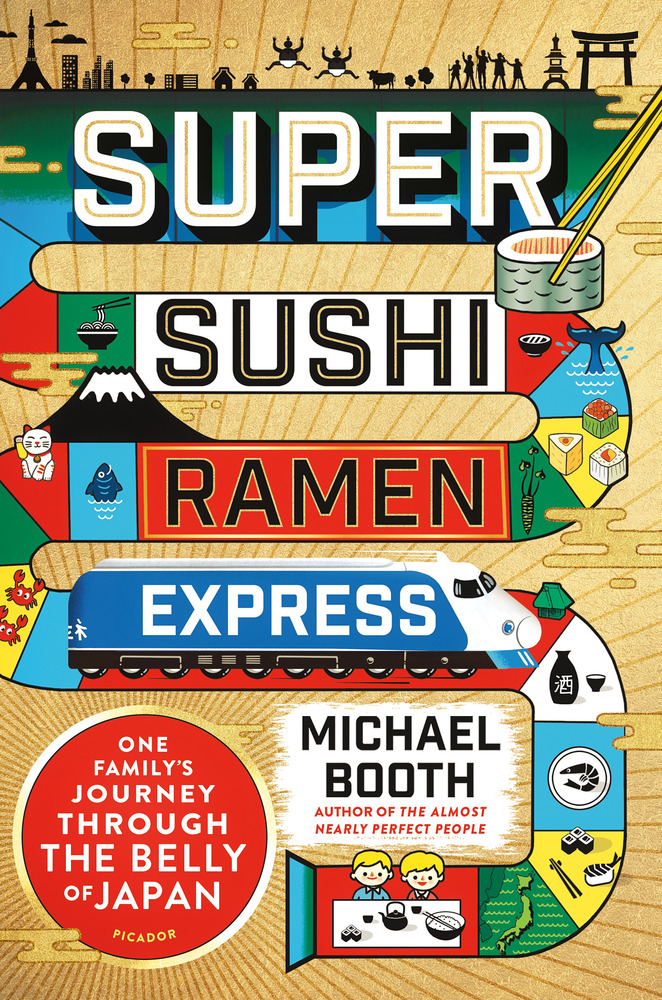
Super Sushi Ramen Express - One Family's Journey Through the Belly of Japan

Japan is arguably the preeminent food nation on earth; it’s a mecca for the world’s greatest chefs and has more Michelin stars than any other country. The Japanese go to extraordinary lengths and expense to eat food that is marked both by its exquisite preparation and exotic content. Their creativity, dedication, and courage in the face of dishes such as cod sperm and octopus ice cream are only now beginning to be fully appreciated in the sushi and ramen-saturated West, as are the remarkable health benefits of the traditional Japanese diet.


Food and travel writer Michael Booth takes the culinary pulse of contemporary Japan, learning fascinating tips and recipes that few westerners have been privy to before. Accompanied by two fussy eaters under the age of six, he and his wife travel the length of the country, from bear-infested, beer-loving Hokkaido to snake-infested, seaweed-loving Okinawa. Along the way, they dine with—and score a surprising victory over—sumo wrestlers, pamper the world’s most expensive cows with massage and beer, share a seaside lunch with free-diving female abalone hunters, and meet the greatest chefs working in Japan today. Less happily, they witness a mass fugu slaughter, are traumatized by an encounter with giant crabs, and attempt a calamitous cooking demonstration for the lunching ladies of Kyoto.


India to get tax, banking related info from Seychelles

Aiming to curb tax evasion and avoidance, India has operationalised the Tax Information Exchange Agreement (TIEA) with Seychelles, one of the major sources of foreign investment into the country.

The New Ecosystem Of The Mauritius International Financial Services Centre

It is a fact that any financial instrument cannot exist in isolation, neither can any proposed policy with regards to the sector. The recent budgetary measures with regards to the financial sector, actively promoted by the FSPA, represents a new ecosystem for the sector. A much needed one with more substance.

The previous model encompassed mostly, banks, used primarily as parking space for funds, management companies, lawyers and auditing firms. That model gave Mauritius the bad image of a tax haven, wrongly most would say, nevertheless there has been few cases which spoilt the basket of eggs.

The New Ecosystem Of The Mauritius International Financial Services Centre

11 September 2016

Le Guide de Sulitzer: Île Maurice et Rodrigues

La première Edition du Guide de Sulitzer se consacre à l’Iles Maurice & Rodrigues. Les articles rédiges mettent en scène des perspective géographiques et sociologiques afin d’y insérer des personnages qui sont en prise avec la vie, les mutations et des enjeux de survie. Quelles que soient les réalités décrites, chaque histoire est abordée avec des personnages qui apportent une dimension positive.


La déclinaison s’articule en tenant compte des décors, gouts, sonorités, senteurs et matière qui sont des vecteurs pour raconter la vie mauricienne. Ces vecteurs offrent une sensualité permettant de mettre en scène des personnages et leurs histoires personnelles, leur démarches individuelles dans la manière d’apprivoiser des réalités évolutives ; du paradoxe des traditions à transmettre en empruntant d’une passe et des origines parcellaires et la capacité à adapter ce passe à la modernité et les exigences du métissage.

09 September 2016

Ile Maurice - 1er Colloque international du Trust et de la Fiducie: la transmission patrimoniale

Le premier Colloque sur les Trusts et Fiducies se tiendra les 13 et 14 Septembre 2016, dans l'île paradisiaque de Maurice. Cette rencontre est organisée conjointement par l'Association des notaires de l'Ile Maurice (ANM), l’International Task Force  Civil Law - Common Law (ITF) et le Conseil Supérieur du Notariat Français (CSN), sous l'égide de l'Union internationale du Notariat.

Reconnaissant l'intérêt croissant dans le mécanisme fiduciaire du Trust et dans la fiducie non seulement en Common Law, mais aussi en Droit Civil et dans les pays connaissant le bi-juridisme, les organisateurs ont préparé un colloque d'une grande importance pour les notaires, les avocats, les conseillers en gestion de patrimoine et les institutions judiciaires elles-mêmes.

En Common Law et dans certaines juridictions de Droit Civil, les trusts et la fiducie sont utilisés pour un grand nombre d'objectifs. Compte tenu de cette grande polyvalence, le colloque limitera son étude au trust, à la fiducie et aux institutions structurellement analogues créés volontairement dans les juridictions de droit civil (par exemple, par acte juridique aux fins de transmission des biens en cas de décès).

Les conférenciers aborderont les thèmes suivants, en particulier:
  • Les caractéristiques de base du Trust de Common law, de la fiducie et des institutions structurellement analogues dans les juridictions de Droit Civil.
  • La reconnaissance du Trust de Common Law dans les juridictions de Droit Civil, par exemple, dans le cas où le défunt avait créé un trust dans une juridiction de Common Law, et où la loi d'une juridiction de droit civil régit la succession.
  • La reconnaissance de la fiducie de Droit Civil et des institutions analogues dans les juridictions de Common Law, par exemple, dans le cas où la fiducie a été établie par le notaire dans un acte authentique.
Inscription (DOCX 164Kb)

Programme (DOCX 165Kb)

08 September 2016

Sans domicile fisc

Évasion, optimisation fiscale et fraude font perdre chaque année entre 60 et 100 milliards d’euros au budget de la France et plus de 1 000 milliards en Europe. Conséquences de la lutte molle de nos gouvernements, l’école, la culture, l’hôpital, la justice, les équipements publics, les collectivités perdent des moyens pour répondre aux besoins des citoyens. Cette austérité qui mine l’État gangrène la démocratie et ouvre la porte aux extrémismes.

Et si l’on passait des paroles aux actes ? Deux frères, l’un député, l’autre sénateur, tous deux nordistes et maires de leurs communes, hommes politiques de terrain et militants engagés, font bouger les lignes dans le cadre de leur mission sur la piste des « sans domicile fisc ». Décryptage et démontage des paradis fiscaux par ces experts, tous deux rapporteurs de commissions d’enquête parlementaires sur le sujet, ce livre s’appuie, notamment, sur leur dialogue inédit avec des personnalités de toutes sensibilités, à travers une série d’interviews-témoignages. Au-dessus des positions partisanes, ils analysent ici des mécanismes de spéculation et préconisent des mesures directes concrètes pour la France, pour l’Europe, pour le monde.

Mauritius Is A Place For Consolidation Of Investment For A Fragmented Market

There is a general consensus in Mauritius that the jurisdiction has all the attributes to become an International Financial Centre.  Mauritius has a diversified economy and is geopolitically well positioned to act as an investment and trading bridge between Africa and Asia. Mauritius has also built, over the years of being the investment structuring platform for India, an eco-system for the structuring of regional headquarters for enterprises doing business in Africa. When you look at Africa today, you have 54 different countries and Mauritius can be a place for consolidation and centralisation for investment and trade for a fragmented market.

Financial Services Institute: Capacity Building To Create The Right Human Competencies For The Right Profession

The setting up of the Financial Services Institute (FSI) as announced in the Budget 2015/16 is a substantial stride onward for the development of Mauritius as an IFC. This initiative goes in line with the ambition of the government of Mauritius to further diversify and enhance the financial services industry. As Mauritius aims highly to move beyond as a tax-centric jurisdiction, the focus on offering value-added services and new financial opportunities is a decisive step in the phase of its development.

Mauritius IFC Set To Re-Invent Investment Climate

The white palm-fringed beaches and lagoons of Mauritius have earned it a deserved and much envied reputation as a high-end tourist destination, but this beautiful volcanic island in the Indian Ocean has much more going for it than that. Once reliant on sugar as its main crop export, Mauritius has in recent years successfully diversified its economy and is becoming almost as well-known as a hub for the international financial services sector, and particularly for investors with eye on Africa.

FSC Mauritius issues Addendum to Circular Letter CL031215 regarding Off-Site Supervision Procedures

The Financial Services Commission, Mauritius (FSC Mauritius) refers to the Circular Letter CL031215 issued on 3 December 2015 regarding Off-Site Supervision Procedures.

The FSC Mauritius is hereby amending section 6.4 of Circular letter CL031215 as follows:

"No MC/RA shall refuse to handover the files and documents pertaining to the GBC to the incoming MC/RA for non-payment of fees (including transfer/exit fees), unless otherwise specified in the services agreement signed between the MC/RA and the GBC."


05 September 2016

How to protect your African investment with a dispute resolution mechanism

Foreign investments tend to involve complex contractual documentation. Given the desire of most investors to have their disputes resolved in a neutral forum, international arbitration tends to be the preferred method of dispute resolution for agreements involving investments in Africa.

01 September 2016

IFC Review: Panama Papers – some perspective from the Cayman Islands

Ian Huskisson and Neil McLarnon examine the fallout from the Panama Papers, providing a Cayman Islands perspective on implication of the leaks.

IFC Review: US Tax Enforcers React to The Panama Papers

Scott D Michel and Arielle M Borsos examine how US tax enforcers have reacted to the Panama Papers leak.

IFC Review: The Undertaker of Panama

Marcus Killick highlights the double standards shown by critics of the offshore industry following the leak of personal data in the Panama Papers.