09 October 2018

The Japanese Passport Is Now the Strongest in the World, with Singapore and South Korea Not Far Behind

Japan has overtaken Singapore to claim the top spot on the 2018 Henley Passport Index, having gained visa-free access to Myanmar earlier this month. Japan now enjoys visa-free/visa-on-arrival access to 190 destinations, compared to Singapore’s total of 189. Japan and Singapore have been neck and neck on the index since they both climbed to 1st place in February — following a visa-exemption from Uzbekistan — and pushed Germany down to 2nd place for the first time since 2014.

This quarter, Germany has fallen further to 3rd place, which it now shares with South Korea and France. France moved up from 4th to 3rd place last Friday when it gained visa-free access to Uzbekistan, while South Korea moved from 4th to 3rd place on 1 October when it gained visa-free access to Myanmar. Germany, France, and South Korea all have a visa-free/visa-on-arrival score of 188. Iraq and Afghanistan continue to hold the bottom (106th) spot of the Henley Passport Index, with only 30 destinations accessible to their citizens.

The US and the UK, both with 186 destinations, have also slid down one spot — from 4th to 5th place — with neither having gained access to any new jurisdictions since the start of 2018. With stagnant outbound visa activity compared to Asian high-performers such as Japan, Singapore, and South Korea, it seems increasingly unlikely that the US and the UK will regain the number 1 spot they jointly held in 2015.

Russia received a boost in September when Taiwan announced a visa-waiver for Russian nationals (valid until July 2019), but the country has nonetheless fallen from 46th to 47th place compared to Q3, because of movements higher up in the ranking. The same is true of China: Chinese nationals obtained access to two new jurisdictions (St. Lucia and Myanmar), but the Chinese passport fell two places this quarter, to 71st overall. This is still an impressive 14-place improvement over the position that China held at the start of 2017.

What has been most remarkable in recent years is the UAE’s stunning ascent on the Henley Passport Index, from 62nd place in 2006 to 21st place worldwide currently. The UAE now holds the number 1 passport in the Middle East region.

Dr. Christian H. Kälin, Group Chairman of Henley & Partners, commented on these developments: “The Henley Passport Index, which is based on exclusive data from the International Air Transport Association (IATA), is an important tool for measuring not only the relative strength of the world’s passports but also the extraordinary results that states can achieve when they work hand in hand with their global peers to build a more interconnected and collaborative world. China and the UAE exemplify this kind of progress, with both states among the highest overall climbers compared to 2017, purely as a result of the strong relationships they have built with partner countries around the world.”

The UAE and Russia consolidate their international position

Strengthening its position as the passport-power champion of the Middle East, the UAE signed a visa-waiver with Russia in July, which is due to come into effect in the coming months.

Commenting on the UAE’s latest visa-waiver agreement, Ryan Cummings, Director of Signal Risk, said that it is aimed at “strengthening bilateral relations between the UAE and another global superpower”, following the visa-waiver signed with China earlier this year. Specifically, this latest agreement with Russia will help the UAE “lower its dependence on its hydrocarbon sector and continue its robust economic growth trajectory” by stimulating tourism and trade.

Tim Geschwindt, Analyst at S-RM Intelligence and Risk Consulting, says the agreement also speaks to Russia’s shifting position within the international community: “The country is continuing to seek improved bilateral relations, as well as trade, investments, and tourism ties, with new partners. Russia’s recent decision to grant visa-free travel access to not only Emiratis but also citizens of several other nations speaks to this effort. Russia’s agreement with the UAE in particular is part of a foreign policy push to attract foreign investment into the country, especially from Emirati businesses and businesspeople.”

Kosovo–EU visa-liberalization on the cards

Looking ahead, the most dramatic climb on the Henley Passport Index might come from Kosovo, which officially met all the criteria for visa-liberalization with the EU in July and is now in discussions with the European Council.

Prof. Florian Trauner, Research Professor at the Institute for European Studies at the Free University of Brussels, commented on this development: “The approval of the European Parliament is a recognition of the hard work done by the Kosovar authorities to fulfill the conditions set by the EU. The discussion within the Council will remain difficult, however. Several member states are reluctant to grant visa-liberalization. Relaxing visa rules may be criticized as being lenient on migration control — a criticism few want to risk in a time when right-wing populist parties are on the rise.”

Citizenship-by-investment countries make strong gains

Countries with citizenship-by-investment (CBI) programs in place all fall within the top 50 of the Henley Passport Index and are continually rising up the ranking. Newcomer Moldova, for example, which launched its CBI program in the second half of this year, has climbed 20 places since 2008. Every CBI program country has improved its visa-free/visa-on-arrival score since the start of the year.

“CBI programs offer access to some of the world’s strongest and most promising passports,” says Dr. Kälin, “and the merit of these passports is a reflection of the underlying stability and attractiveness of the countries themselves. The travel freedom that comes with a second passport is significant for individuals, while the economic and societal value that CBI programs generate for host countries can be transformative.”

05 October 2018

Mauritius: The Financial Intelligence and Anti-Money Laundering (Amendment) Regulations 2018

Mauritius: The Financial Intelligence and Anti-Money Laundering Regulations 2018

SPERI: The UK’s Finance Curse? Costs and Processes

A new SPERI report assesses the cost of ‘too much finance’ for the UK from the 1990s to the current period.

The UK’s Finance Curse? Costs and Processes suggests that the total cost of lost growth potential for the UK caused by ‘too much finance’ between 1995 and 2015 is in the region of £4,500 billion. This total figure amounts to roughly 2.5 years of the average GDP across the period.

The report provides the first ever numerical estimate for the scale of damage caused by the UK’s finance sector growing beyond a useful size. Of the £4,500 billion loss in economic output, £2,700 billion is accounted for by the misallocation of resources where resources, skills and investments are diverted away from more productive non-financial activities into finance. The other £1,8 billion arises from the 2008 banking crisis.

The report is by Professor Andrew Baker, Professorial Fellow in Political Economy in SPERI and the Department of Politics at the University of Sheffield; Professor Gerald Epstein, Professor of Economics and Co-Director of the Political Economy Research Institute at the University of Massachusetts Amherst, and Dr Juan Montecino, postdoctoral researcher at the University of Columbia.

Professor Andrew Baker said: “The ‘too much finance’ problem has been identified in previous studies. For the UK, the numbers are powerful and hint at a deep underlying problem of misallocation, and ‘crowding out.’  UK economic strategy in a post-Brexit world, needs to make addressing this the central challenge, recognising that where finance is concerned, more can sometimes be less, and less could be more.”

The data in the report suggests that the UK economy, may have performed much better in overall growth terms if: (a) its financial sector was smaller; (b) if finance was more focused on supporting other areas of the economy, rather than trying to act as a source of wealth generation (extraction) in its own right.

This evidence also provides support for the idea that the UK suffers from a form of ‘finance curse’: a development trajectory of financial over dependence involving a crowding out of other sectors and a skewing of social relations, geography and politics.

The authors call for a focused and systematic interdisciplinary research agenda using the finance curse framing to further dig behind the numbers presented in the report. They argue that the report’s findings and ideas should mark the start of a process of more carefully debating and considering the potential social and economic costs of excessive finance in the UK and should be of both interest to researchers and of concern to policy makers.

Mauritius - Finance ​​InFocus: Newsletter October 2018 Issue 2​

A monthly publication of the  Ministry of Financial Services and Good Governance

03 October 2018

FireEye - APT38: Details on New North Korean Regime-Backed Threat Group

Today, we are releasing details on the threat group that we believe is responsible for conducting financial crime on behalf of the North Korean regime, stealing millions of dollars from banks worldwide. The group is particularly aggressive; they regularly use destructive malware to render victim networks inoperable following theft. More importantly, diplomatic efforts, including the recent Department of Justice (DOJ) complaint that outlined attribution to North Korea, have thus far failed to put an end to their activity. We are calling this group APT38.

We are releasing a special report, APT38: Un-usual Suspects, to expose the methods used by this active and serious threat, and to complement earlier efforts by others to expose these operations, using FireEye’s unique insight into the attacker lifecycle.

We believe APT38’s financial motivation, unique toolset, and tactics, techniques and procedures (TTPs) observed during their carefully executed operations are distinct enough to be tracked separately from other North Korean cyber activity. There are many overlapping characteristics with other operations, known as “Lazarus” and the actor we call TEMP.Hermit; however, we believe separating this group will provide defenders with a more focused understanding of the adversary and allow them to prioritize resources and enable defense. The following are some of the ways APT38 is different from other North Korean actors, and some of the ways they are similar:
  • We find there are clear distinctions between APT38 activity and the activity of other North Korean actors, including the actor we call TEMP.Hermit. Our investigation indicates they are disparate operations against different targets and reliance on distinct TTPs; however, the malware tools being used either overlap or exhibit shared characteristics, indicating a shared developer or access to the same code repositories. As evident in the DOJ complaint, there are other shared resources, such as personnel who may be assisting multiple efforts.
  • A 2016 Novetta report detailed the work of security vendors attempting to unveil tools and infrastructure related to the 2014 destructive attack against Sony Pictures Entertainment. This report detailed malware and TTPs related to a set of developers and operators they dubbed “Lazarus,” a name that has become synonymous with aggressive North Korean cyber operations.
  • Since then, public reporting attributed additional activity to the “Lazarus” group with varying levels of confidence primarily based on malware similarities being leveraged in identified operations. Over time, these malware similarities diverged, as did targeting, intended outcomes and TTPs, almost certainly indicating that this activity is made up of multiple operational groups primarily linked together with shared malware development resources and North Korean state sponsorship.

Since at least 2014, APT38 has conducted operations in more than 16 organizations in at least 11 countries, sometimes simultaneously, indicating that the group is a large, prolific operation with extensive resources. The following are some details about APT38 targeting:
  • The total number of organizations targeted by APT38 may be even higher when considering the probable low incident reporting rate from affected organizations.
  • APT38 is characterized by long planning, extended periods of access to compromised victim environments preceding any attempts to steal money, fluency across mixed operating system environments, the use of custom developed tools, and a constant effort to thwart investigations capped with a willingness to completely destroy compromised machines afterwards.
  • The group is careful, calculated, and has demonstrated a desire to maintain access to a victim environment for as long as necessary to understand the network layout, required permissions, and system technologies to achieve its goals.
  • On average, we have observed APT38 remain within a victim network for approximately 155 days, with the longest time within a compromised environment believed to be almost two years.
  • In just the publicly reported heists alone, APT38 has attempted to steal over $1.1 billion dollars from financial institutions.

Investigating intrusions of many victimized organizations has provided us with a unique perspective into APT38’s entire attack lifecycle. Figure 1 contains a breakdown of observed malware families used by APT38 during the different stages of their operations. At a high-level, their targeting of financial organizations and subsequent heists have followed the same general pattern:
  1. Information Gathering: Conducted research into an organization’s personnel and targeted third party vendors with likely access to SWIFT transaction systems to understand the mechanics of SWIFT transactions on victim networks (Please note: The systems in question are those used by the victim to conduct SWIFT transactions. At no point did we observe these actors breach the integrity of the SWIFT system itself.).
  2. Initial Compromise: Relied on watering holes and exploited an insecure out-of-date version of Apache Struts2 to execute code on a system.
  3. Internal Reconnaissance: Deployed malware to gather credentials, mapped the victim’s network topology, and used tools already present in the victim environment to scan systems.
  4. Pivot to Victim Servers Used for SWIFT Transactions: Installed reconnaissance malware and internal network monitoring tools on systems used for SWIFT to further understand how they are configured and being used. Deployed both active and passive backdoors on these systems to access segmented internal systems at a victim organization and avoid detection.
  5. Transfer funds: Deployed and executed malware to insert fraudulent SWIFT transactions and alter transaction history. Transferred funds via multiple transactions to accounts set up in other banks, usually located in separate countries to enable money laundering.
  6. Destroy Evidence: Securely deleted logs, as well as deployed and executed disk-wiping malware, to cover tracks and disrupt forensic analysis.


APT38 is unique in that it is not afraid to aggressively destroy evidence or victim networks as part of its operations. This attitude toward destruction is probably a result of the group trying to not only cover its tracks, but also to provide cover for money laundering operations.

In addition to cyber operations, public reporting has detailed recruitment and cooperation of individuals in-country to support with the tail end of APT38’s thefts, including persons responsible for laundering funds and interacting with recipient banks of stolen funds. This adds to the complexity and necessary coordination amongst multiple components supporting APT38 operations.

Despite recent efforts to curtail their activity, APT38 remains active and dangerous to financial institutions worldwide. By conservative estimates, this actor has stolen over a hundred million dollars, which would be a major return on the likely investment necessary to orchestrate these operations. Furthermore, given the sheer scale of the thefts they attempt, and their penchant for destroying targeted networks, APT38 should be considered a serious risk to the sector.

Raconteur: Future of Payments 2018

Innovation in the payments sector is set to make cash and card look as old fashioned as bartering with livestock, and financial companies are scrambling to keep up. The Future of Payments report, published in The Times, details the sluggish progress of open banking, while China sprints ahead with highly developed mobile payment systems. From blockchain to biometrics, it explores the technological advances changing the face of how we pay, alongside comment on lingering gender inequality in the financial sector and an infographic on the battle for digital wallets.

FSC Mauritius issues Circular Letter with respect to Payment Intermediary Services Licence - New Minimum Capital Requirements

Mauritius: Financial Services (Authorised Company) Rules 2018

FSC Rules made by the Financial Services Commission under Section 71A and 93 of the Financial Services Act 2007.

02 October 2018

Democracy in the Crosshairs: How Political Money Laundering Threatens the Democratic Process

This report outlines how hostile states use "dark money" to subvert liberal democracies' political systems. It argues that this poses a grave threat to the integrity of democratic systems and, indeed, to national security itself.

BOM: Mutual Evaluation Report for Mauritius conducted by the Eastern and Southern Africa Anti-Money Laundering Group

1. The Eastern and Southern Africa Anti-Money Laundering Group (‘ESAAMLG’), an FATF-Style Regional Body, has published, on Friday 21 September 2018, the 2nd Round Mutual Evaluation Report for Mauritius on its assessment of the country’s level of compliance with the FATF forty recommendations and the level of effectiveness of its AML/CFT system.

2. The Report noted that the Bank of Mauritius (‘Bank’), as the regulator of the Banking Sector, has issued Guidance Notes on Combating Money Laundering and the Financing of Terrorism (Guidance Notes) for its licensees. The Report also noted that there is a high degree of consistency of the Bank’s Guidance Notes with the FATF Standards in respect of adoption of CDD measures, which has promoted understanding and application of the CDD obligations by the financial institutions (FIs). This was enhanced by the engagement of the Bank with its regulated entities in various fora. The technical deficiency regarding the Guidance Notes highlighted in the Report has already been addressed in the Finance (Miscellaneous Provisions) Act 2018.

3. The Report recorded that the Bank has procedures in place for assessing the fitness and probity of significant shareholders, beneficial owners, directors and senior management at licensing stage including post-licence acquisition of significant interest in an entity, which helps in preventing criminals from holding shares or holding a management function in institutions under the Banking Act. The Report also referred to sanctions imposed on licensees in respect of non-compliance with the Guidance Notes as demonstrated by statistics provided by the Bank.

4. The Report made mention about measures put in place by the Bank, notably the implementation of an automated system and acquisition of transaction monitoring tools which have significantly improved the ability of the regulated entities to adequately apply on-going monitoring measures especially on the high-risk customers and transactions in a uniform manner.

5. The Report further highlighted that the licensees of the Bank have demonstrated a good appreciation of the risks faced by their operations and implemented measures to address them. The Report noted that banks went above and beyond the prescribed mitigating controls in accordance with their risk appetite and applied on-going enhanced due diligence measures on high risk customers and beneficial owners through the use of technology-based systems for transaction monitoring. The financial institutions were also able to demonstrate the implementation of key compliance measures such as record keeping, internal controls, employee screening, wire transfers, new technologies and training.

6. The Report, however, also identified areas for improvement in the Bank’s AML/CFT supervisory and regulatory framework, such as, a more documented AML/CFT risk-based framework, separation of the prudential and AML/CFT supervisory frameworks, improvements in legislation enforcement and administrative sanctions for breaches of AML/CFT compliance by licensees.

7. The President of the Council of Ministers of the ESAAMLG mentioned in a Press Release dated 24 September 2018 that the Council was pleased to learn that Mauritius had already started addressing some of the deficiencies identified in the MER and encouraged Mauritius to continue with the positive work it has started.

8. As regards improvement, the Bank has already launched a remediation process through the deployment of an elaborate action plan to address the Recommendations. Some of the measures, which the Bank has already embarked upon, are as follows:
a) The Bank started to engage with the World Bank way back in early 2017 to formalise a documented risk-based AML/CFT supervisory framework and the implementation of this process has effectively started since January 2018 and is on-going. 
b) The Bank has set up a dedicated arm for AML/CFT supervision of financial institutions and enhanced its AML/CFT off-site monitoring supervisory toolkit through a revision of its reporting requirements. 
c) The Bank has reviewed its licensing criteria since October 2017 to make it mandatory for an applicant to have a fully automated AML/CFT system in place prior to the start of operations. 
d) With a view to enhancing cooperation with other stakeholders in the fight against money laundering and financing of terrorism, the Bank moved from bilateral to tripartite memorandum of understanding with the Financial Intelligence Unit and the Financial Services Commission on 19 September 2018. 
e) The technical deficiencies in the legislation have been addressed to a large extent through a number of amendments brought to the Bank of Mauritius Act, Banking Act and Financial Intelligence and Anti-Money Laundering Act in the Finance (Miscellaneous Provisions) Act 2018, the purport of which are, inter alia, as follows:

(i) to ensure that the Guidance Notes issued by the Bank meet all the criteria of the FATF ‘Note on Legal Basis of Requirements on Financial Institutions and DNFBPs’ on Combating Money Laundering and the Financing of Terrorism & Proliferation (the FATF Recommendations); 
(ii) The Bank has been vested with powers to impose administrative penalties on financial institutions for non-compliance with the Guidance Notes; 
(iii) The Bank may issue regulations, guidelines, directives or instructions in order to discharge, or facilitate the discharge of, any obligation binding on Mauritius by virtue of a decision of the United Nations Security Council; 
(iv) The Bank may share information with competent agencies responsible for AML/CFT; 
(v) Financial institutions can disclose information among themselves in circumstances set out in FATF Recommendations and Methodology; 
(vi) The existing practices of the Bank with respect to (a) due diligence conducted on the beneficial owners of an applicant for a banking licence and (b) the prohibition for the establishment of a shell bank in Mauritius have been entrenched in the law; 
(vii) The timeframe to undertake an on-site examination is at the discretion of the Bank to facilitate risk-based supervision; 
(viii) Financial institutions have been required to undertake a risk assessment, including money laundering and terrorism financing risk, prior to the launch or use of new products and new business practices.
9. The Bank will continue to collaborate with the FIU, FSC, MRA, ICAC, other competent authorities and the industry at large, both at the national and international level, to support measures to address the money laundering and terrorism financing risks in the financial sector.

10. The Bank has made significant improvements to its AML/CFT regulatory and supervisory framework. The Bank is committed to consolidate the AML/CFT framework and will continue to implement all Recommendations of the Report.

01 October 2018

IFC Review - Offshore Perceptions: Where Are We Now?

Issues such as client confidentiality and tailored legislation are now less important to clients. Ease of doing business, reputation with the public and political stability are now valued more.

Mauritius - Financial Sector: Pending Issues

Like the electoral reform proposals, the two-day ‘Mauritius International Financial Centre-Forward Looking’ conference held on , 19 & 20 September 2018 at Intercontinental Mauritius Resort, turned out to be a non-event, more of a damage limitation exercise after the Eastern and Southern Africa Anti Money Laundering Group (ESAAMLG) damning report. It was was all about the latest trends impacting on our financial sector but limited in its “open dialogue” on the pending issues that are worrying the global business operators. Many of them felt that they were left in the lurch on most of the issues. 

Quantum Global Denounces Intimidation Tactics of the FSDEA and Angolan Authorities

Quantum Global expressed its deep concern today at the unjustified and illegal detention of its Chairman and Founder Mr Jean-Claude Bastos de Morais, a national of Switzerland and Angola, by the Angolan authorities.

Quantum Global denounced attempts by the new administration of the Fundo Soberano de Angola (FSDEA) through the Angolan justice system, to resort to intimidation, coercion and abuse of human rights to get out of contracts duly entered into between Quantum Global and FSDEA.

After a change in administration last year, the new leadership of the FSDEA is trying to get out of a series of long-term investment agreements with Quantum Global and has used increasingly offensive tactics against Quantum Global, Mr Bastos and staff in Angola, Mauritius and Switzerland — providing misleading and false information to the authorities and courts — in an attempt to achieve this objective.

After returning to Angola on his own accord in May, Mr Bastos has been closely cooperating with the authorities throughout their investigations. As Mr. Bastos has been banned from leaving the country and obliged to report to the Office of the Attorney General every fortnight since May 18, there were no reasons to justify the preventive detention order issued by the Attorney General’s office on September 24. Moreover, the detention order does not contain any new allegations against Mr Bastos that could justify an aggravation of the original preventive measures, which were also applied outside the law.

Quantum Global believes that the measures to constrain Mr Bastos were designed to force him to give up his rights and to surrender all assets and funds under the management of the Group. These tactics were supported through the promotion of a false narrative publicly broadcast on government-controlled media.

The preventive detention order focuses on local Angolan real estate transactions that did not involve Quantum Global. An assessment made by Mr. Bastos’s legal counsel of the evidence and grounds of the preventive detention order shows that they are wrong and unfounded.

Mr Bastos has taken legal measures to challenge his detention, noting that he was collaborating with the authorities in charge of the investigation, including voluntarily providing documents and did not breach any of the initial preventive measures applied in May. Consequently, the preventive detention order violates the principles of necessity, adequacy, proportionality and subsidiarity, thus rendering it illegal, according to legal advisors.

Moreover, the detention of Mr Bastos in the Viana prison, a place for violent offenders, is in violation of the order of the Attorney General’s Office, which stated that Mr Bastos should be taken to the São Paulo prison hospital. Quantum Global believes that the harsh conditions prevalent in Viana prison constitute a further violation of his human rights, are inconsistent with a state that claims to be democratic and subject to the rule of law, and indicate an intention to put Mr Bastos in a situation of isolation from his relatives and colleagues. Violations of human rights in Viana prison have been the subject of criticism in recent years by many international human rights organizations, including by Amnesty International.

A further demonstration of the arbitrary actions of the Angolan Attorney General was in a press release issued on September 24 claiming that the detention of Mr Bastos was connected to the attempted $500 million fraud case involving the Banco Nacional de Angola (BNA) “already referred to the Supreme Court”.  Quantum Global reiterated that neither the Group, in its role as asset manager for the FSDEA, nor Mr Bastos were a party to the fraud case.

The FSDEA’s own legal counsel, in its affidavit submitted to the English High Court on April 26, stated that “notwithstanding Mr Bastos’s previous involvement with the BNA, he has not been accused of any involvement in the BNA fraud”. The same counsel is on record as the lawyer on the fraud case.

Regarding the management of the FSDEA, Quantum Global noted that the English High Court had only in August reached a judgment on the dispute between the two parties, strongly criticizing the FSDEA and its lawyers for seriously misleading the Court and being culpable in their actions.

The English High Court found that the FSDEA misled the Court and that the FSDEA was liable for damages. Moreover, the judge of the English High Court stated in his final judgment that the E&Y report commissioned by the FSDEA concluded that Quantum Global’s fees and offshore structures were in line with industry standards.

Quantum Global has repeatedly stated its availability to discuss a negotiated and immediate solution with the FSDEA that otherwise will have to be settled through a number of lengthy arbitration proceedings.

Quantum Global reiterates its call for the FSDEA to advance to a good faith solution, in accordance with international commercial law, to maintain the value to the portfolio and secure the jobs created in Angolan industries including ports, forestry, agriculture and real estate.

Mauritius: Financial Services (Authorised Company) Rules 2018 - New Application Forms for Authorised Companies


COMMUNIQUÉ

New Application Forms for Authorised Companies

The Finance Act 2018 amended the Financial Services Act (FSA) to introduce S71A – Authorised Company.

In this respect, the FSC is pleased to announce that application forms for Authorised Companies are accessible as follows-

Applications for Authorised Companies should be submitted on Application Form A-AC; and 

A simplified process will be in place for all companies issued with a Category 2 Global Licence, after 16 October 2017, who wish to change legal regime by applying for Authorised Company status. Applicants are invited to fill in Application Form B-AC.

The FSC is equally pleased to inform that the processing and annual fees will be waived for applications made on behalf of companies already holding a Category 2 Global Business Licence and submitted until 31 December 2018.

The FSC will start accepting application as from Monday 8 October 2018.

For any further queries please contact Pristy Tharanee on 404 5607 (Ext 7033).

01 October 2018

29 September 2018

Raconteur: Regulation Technology 2018

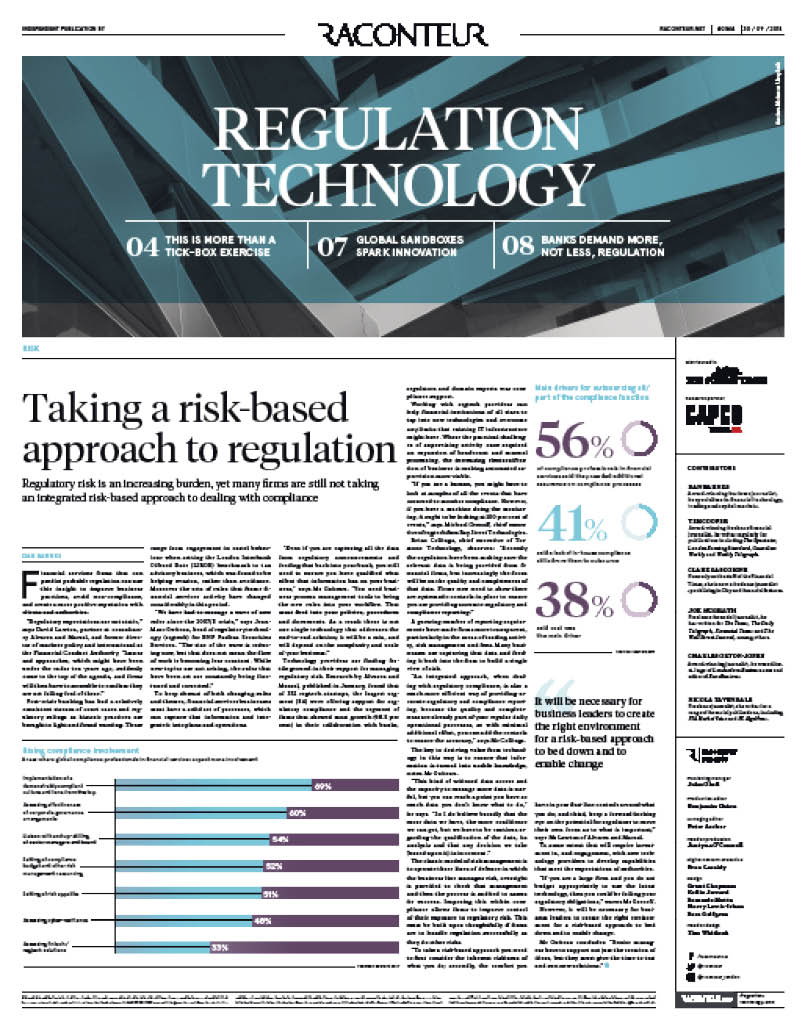
Following the 2008 financial crash, increasing levels of regulation have been introduced to hold the financial services sector to account and new regulation technology has sprung up as a result. The Regulation Technology report, published in The Sunday Times, explores whether regulation is holding back traditional banks from innovating and how capital markets are slowly embracing the technology. It covers how some firms are taking a risk-based approach to regulation compliance, and whether future regtech could do more than cover backs and tick boxes. Also featured is an infographic detailing the many areas where this technology can add value.

Nespresso Explorations 2018: The Picks Of The Year

Every drop of the coffee we bring you is the expression of an extraordinary set of circumstances or series of events. Every sip you take is the outcome of a distinctive environment, some precise conditions, a remarkable history and the dedicated expertise of skilled workers.

Welcome to EXPLORATIONS, an exclusive collection of coffees chosen by our experts as the most fascinating of the year due to their environment, rarity and exceptional in-cup results.

Carefully selected by our experts for the rarity and complexity of their in-cup profiles, their diverse origins and unusual growing conditions, you're invited to discover this unique edition of EXPLORATIONS: OUR PICKS OF THE YEAR

Galapagos Santa Cruz

Born from an unusual microclimate, extraordinary ecosystem and harmonious farming, the sweet cereal and biscuit notes of this Espresso are as surprising as the exotic island where it grows.

República Dominicana Valle Del Cibao

Shaded by a mountain, the perfect growing conditions on this island pair with the innovation of a group of coffee farmers to bring you a striking Espresso with refreshing green notes of fruit and nuts.

Nicaragua Las Marias

It’s in a pocket of rainy, shaded terrain amongst Nicaragua’s northern mountain range that this fruity and sweet cereal Espresso came to life. Let us introduce our first single estate coffee from this award-winning region.

India Mylemoney

From the heights of a place with a treasured coffee history, we bring you a complex Espresso with dry cereal and toasted notes reminiscent of bread crust. You can almost taste the passed-down farming wisdom in every sip of this single estate coffee.


Full Box Explorations 2018: 
  • Two single estate coffees: India Mylemoney and Nicaragua Las Marias.
  • Two single origin coffees coming from islands: Galapagos Santa Cruz and República Dominicana Valle Del Cibao.
  • Two Reveal Glasses 
  • A Coffee Table Book containing the coffee stories and tasting recommendations. 

27 September 2018

Global Green Finance Index (GGFI) Second Edition Published Today

Amsterdam and London have topped the latest global rankings of green financial centres, according to the latest edition of the Global Green Finance Index. Copenhagen and Paris came second. But overall scores reflect that the share of financial markets that can be considered sustainable remains very low.

The Global Green Finance Index (GGFI) is published every six months and ranks global financial centres according to the depth and quality of their green finance offerings. In today’s report, GGFI 2:
  • Amsterdam and Copenhagen came first and second for depth, pushing London into third place.
  • In the quality rankings, Paris moved up three places to second, with London retaining its top spot.
  • In North America, Montreal came first for depth and San Francisco first for quality.
  • Shanghai, Casablanca, São Paulo and Prague topped the rankings for both depth and quality in their regions.
  • The biggest improvers were San Francisco, Toronto, and Vienna, which moved up five or more places in the depth index. Munich, Copenhagen, Toronto, and Madrid moved up five or more places for quality.
  • Paris, Frankfurt, and Singapore led the centres most cited as likely to become more significant over the next two to three years.
  • Renewable energy investment, sustainable infrastructure finance, and green bonds remained the areas of most interest.
  • There was increasing interest in fossil fuel disinvestment, carbon disclosure and green insurance.
  • The data suggest that leadership on quality of life issues may be an enabling factor for the growth of green finance.

Further analysis of the data and trends in green finance development can be found in the full GGFI 2 report:


Dr. Simon Zadek, Visiting Professor at Singapore Management University, and Principal of Project Catalyst at the United Nations Development Programme said:

“Financial centres have a central role in aligning financial flows with the Sustainable Development Goals, including climate outcomes. The Global Green Finance Index helps us track progress, and should inform our collective efforts to secure this alignment.”

Dr Kirsten Dunlop, Chief Executive Officer of EIT Climate-KIC, said:

“This Index comes at a time when the full cost of a rapidly changing climate system is moving from scientific consensus to observable reality. In order to secure a prosperous zero-carbon future, we need to go further & faster in our efforts to rewire the global financial system. The Index brings useful visibility over our collective progress and will help to mobilise more financial centres to approach sustainable investment with renewed effort and intent.”

Professor Michael Mainelli, Executive Chairman of Z/Yen Group, said:

“The leading centres in the index were generally rated higher for the quality of their green finance than they were for depth. This indicates both the scale of transition facing larger centres and the potential for smaller financial centres to advance through specialisation, a trend that is already playing out in the rankings.”

Benoît Lallemand, Secretary General of Finance Watch, said:

“The survey shows increasing levels of interest in fossil fuel disinvestment and carbon disclosure. This is a welcome trend that we hope policymakers and investors will encourage. Overall, we see a mismatch between some of the hype around green finance and the reality of financial flows. We’ll campaign with our partners to reconcile the two.”

André Hoffmann, President of MAVA Fondation pour la Nature, said:

“Financial centres are uniquely well placed to drive the changes in incentives and understanding needed to achieve sustainable economic transition. Today’s report underlines the strong support among market participants for policymakers to intervene, both to catalyse growth in this sector and to shape the financial system to support sustainability goals.”

GGFI 2 results:

Top 10 centres for depth:
  • Amsterdam
  • Copenhagen
  • London
  • Luxembourg
  • Stockholm
  • Paris
  • Shanghai
  • Montreal
  • Zurich
  • Vancouver

Top 10 centres for quality:
  • London
  • Paris
  • Amsterdam
  • Copenhagen
  • Stockholm
  • Luxembourg
  • Zurich
  • Hamburg
  • Munich
  • San Francisco

Download the full report: Global Green Finance Index 2

26 September 2018

Raconteur: Digital Transformation 2018

There can be no more common business buzzwords than “digital transformation”, but what do they really mean for organisations? The Digital Transformation report, published in The Times, considers what digitisation means for workplace morale, as well as democracy, and how it is transforming sectors from infrastructure to private equity. Also featured is an infographic on crucial elements of a strong digital culture and an examination of five brands that learnt from their digital failures

24 September 2018

Mauritius - The Financial Sector: Challenges ahead

The Global Business Sector has been feeling the heat from all sides. First, we had the case of Mauritius being classified as a high-risk jurisdiction by a few global banks. Next, we had a dig from our dear African brothers that the Global Business Companies are just doing ‘brassplate’ operations in Mauritius

23 September 2018

TJN - EU tax haven blacklist blocks just 1% of financial secrecy services threatening EU economies

Tax havens currently blacklisted by the EU are responsible for just 1 per cent of the financial secrecy services facing EU member states, while one-third (34 per cent) is supplied by financial centres from within the EU targeting other member states. New research published today by the Tax Justice Network reveals that the EU’s blacklist has failed to include any of the top 10 suppliers of financial secrecy services to the EU – services like shell companies and banking secrecy laws which enable money laundering, corruption, tax abuse and the financing of terrorism.

The largest supplier of financial secrecy to EU member states is the US (4.7 per cent). This is five times the financial secrecy supplied all together by the seven tax havens blacklisted by the EU – American Samoa, Guam, Namibia, Palau, Samoa, Trinidad and Tobago, and the US Virgin Islands. Four of the top 10 suppliers of financially secrecy services to the EU are EU member states: the Netherlands, Luxembourg, Germany and France. The Netherlands is the second largest supplier (4 per cent); Luxembourg is third (3.8 per cent); Germany, the sixth largest supplier, is responsible for 3.3 per cent; France, the eighth largest supplier, is responsible for 2.3 per cent.

The new research deals another blow to the idea that financial secrecy is limited to a few remote, palm-fringed islands operating on the peripheries of the world economy. The research reveals a stark picture of the world’s major financial centres undermining other countries’ tax laws and facilitating other crimes and corrupt practices.

Germany supplies more than twice as much financial secrecy services to the Netherlands as the infamous Panama does. Meanwhile, the Netherlands supplies more than three times as much financial secrecy services to Germany as does Panama. Just over 4 percent of financial secrecy facing Sweden is supplied by the Cayman Islands, where Swedish residents have stored $11bn in assets. In comparison, nearly 6 per cent of financial secrecy facing Sweden is supplied by the US, where Swedish residents have stored a whopping $144bn in assets.

Among the criteria that the EU considers when determining whether to add a country to its tax haven blacklist is the transparency rating the country receives from the OECD. Nearly half (49 per cent) of financial secrecy services facing the EU are supplied by OECD countries.

Alongside the tax haven blacklist, most EU member states have adopted automatic exchange of information treaties as additional countermeasures against financial secrecy. These treaties enable tax authorities to automatically retrieve information on the banking activities that their residents’ carry out in other tax jurisdictions, helping authorities pierce through the fog of financial secrecy and detect illicit financial flows heading out of their jurisdictions. EU members states have been able to use automatic exchange of information treaties more effectively than the tax haven blacklist to guard against the financial secrecy devices targeting their economies. On average, EU member states have put in place treaties that give their tax authorities power to retrieve some information in respect of 82 per cent of the financial secrecy services facing their countries, according to the Tax Justice Network’s research.

While EU members states have treaties in place among each other and with other countries, not a single EU member state has secured a sufficiently reciprocal automatic exchange of information treaty with the US. The US alone is responsible for 22 per cent of the financial secrecy targeting the EU that is not covered by an automatic exchange of information treaty, making the US the EU’s greatest enabler of financial secrecy, which in turn enables tax abuse, corruption, money-laundering and the financing of terrorism.

The US, which is the largest individual supplier of financial secrecy to 29 countries and among the top 10 suppliers of financial secrecy to 83 countries, does not have any sufficiently reciprocal automatic information exchange treaties in place with most countries. The US instead relies on its Foreign Account Tax Compliance Act, which requires countries to provide US authorities with information similar to that usually shared under automatic exchange of information treaties. However, under the Foreign Account Tax Compliance Act, the US is sharing little to no information in return with other countries.

If the US were to reciprocally share information with other countries by putting in place automatic exchange of information treaties, countries across the world would on average be able to guard against additional 4.6 percentage points of the financial secrecy targeting their jurisdictions. The greatest benefactor would be Argentina, which would see the share of financial secrecy it guards against increase from 58.5 per cent to 99.7 per cent.

The Tax Justice Network is calling on the EU to shift away from its reliance on a tax haven blacklist that misses all major targets, and instead to impose a 30 per cent withholding tax on jurisdictions which have not signed up to automatic exchange of information treaties.

Markus Meinzer, a director at the Tax Justice Network, said:

“We’re all aware of the stinging price ordinary folk pay when governments let a small group of people run amok with billions and billions in assets in secrecy jurisdictions. The EU has recently taken important steps to tackle financial secrecy, but it is hard to call the EU’s tax haven blacklist an effective firewall against economic threats when it fails to detect 99 per cent of the financial secrecy threatening EU member states. 
“Our research shows that automatic exchange of information treaties are astronomically more effective at guarding against financial secrecy than the EU’s blacklist. We know encouraging transparency through withholding taxes works because it’s exactly what the US did to get EU countries on board with sharing information with US tax authorities. EU member states must get the world’s greatest enablers of financial secrecy, most obviously the US, to sign up to these treaties and play by the same rules, to keep our economies safe.”
Download the policy paper:

By Petr Janský, Andres Knobel, Markus Meinzer and Miroslav Palanský.

Download the academic study:

By Petr Janský, Markus Meinzer, Miroslav Palanský 

20 September 2018

ESAAMLG: Mutual Evaluation Report of Mauritius - July 2018

ESAAMLG has completed its assessment of Mauritius’ anti-money laundering and counter-terrorist and proliferation financing (AML/CFT) system. The Mutual Evaluation Report of Mauritius sets out how well Mauritius has implemented the technical requirements of the FATF Recommendations and how effective its AML/CFT system is. The report presents the key findings of the assessment team and the priority actions for Mauritius to improve its AML/CFT system.

19 September 2018

UK: “Wild West” crypto-assets should be regulated

The Treasury Committee publishes a unanimously-agreed Report on crypto-assets for its Digital Currencies inquiry.
Key findings
  • Regulation needed for "Wild West" crypto-asset market
  • Problems include volatile prices, hacking vulnerabilities, minimal consumer protection, and anonymity aiding money laundering
  • Blockchain is currently slow, costly and energy-intensive, but there is potential for data storage uses
  • The ambiguity of the UK Government and regulators' position is clearly not sustainable
  • Regulation could improve customer outcomes, enable sustainable growth, and reduce certain risks
  • In deciding the regulatory approach, Government should decide if growth should be encouraged
  • Proportionate regulation could see UK as well placed to become global centre for crypto-assets

Report summary
  • Crypto-assets, and most Initial Coin Offerings (ICO), are currently not within the scope of Financial Conduct Authority (FCA) regulation. Crypto-asset investors are currently afforded very little protection from the litany of risks, namely there are no formal mechanisms for consumer redress, nor compensation.
  • Self-regulating bodies in the crypto-asset industry, which set out codes of conduct and best practice for the industry, are wholly voluntary. Inevitably, there are firms that will ignore them. This is clearly insufficient. As the Government and regulators decide whether the current Wild West situation is allowed to continue, or whether they are going to introduce regulation, consumers remain unprotected. The Committee strongly believes that regulation should be introduced. At a minimum, regulation should address consumer protection and Anti-Money Laundering (AML).
  • In deciding the regulatory approach, the Government and regulators should evaluate the risks of crypto-assets, and assess whether their growth should be encouraged. If growth is favoured, regulation could lead to positive outcomes for the crypto-asset market, including the move toward a more mature business model and increased liquidity. If the UK develops a proportionate regulatory environment for crypto-assets, the UK could be well placed to become a global centre for this activity.
  • Currencies act as a medium of exchange, a store of value, or a unit of account. There are currently no cryptocurrencies that perform these functions. As cryptocurrencies are being used widely for speculation, well-functioning cryptocurrencies exist only as a theoretical concept. Accordingly, this Report uses the term 'crypto-assets' as it's more helpful and meaningful in describing Bitcoin and many other 'altcoins'.
  • A prominent feature of crypto-assets is the volatility of their prices. For example, the price of a Bitcoin increased from $6,472 in November 2017 to $17,629 in December 2017, and fell to $7,208 in February 2018. Investors are exposed to large potential gains, but correspondingly a greater risk of loss. Accordingly, investors should be prepared to lose all their money.
  • Several crypto-asset exchanges, which are used to convert crypto-assets into conventional currency, have been hacked and customers' crypto-assets have been stolen. As there is no collective deposit insurance scheme to compensate investors in the event of a hack, the risk of hacking associated with crypto-assets may not be something that investors in conventional assets have experience of. Therefore, they may not be well placed to judge this risk. This constitutes further evidence that crypto-assets are particularly ill-suited to retail investors.
  • An additional risk that consumers may not be aware of is that some customers who have lost their passwords to a crypto-asset platform have been told by the firm that runs their account that their password cannot be restored. Thus, there is no recourse for customers who have lost their password, and they are locked out of their account permanently. This often-unexpected outcome for investors is a stark contrast against how customers of banks, and other regulated financial services firms, are treated.
  • The advertisements of both ICO issuers and crypto-asset exchanges are not regulated by the FCA. One-sided adverts imply that the crypto-asset market will only go up, and that anyone can make a lot of money easily. The FCA’s consumer warnings are a feeble corrective to such misleading adverts. The regulator needs more power to control how crypto-asset exchanges and ICOs market their services.
  • Crypto-asset exchanges are not currently included in AML regulations. Owing to this, and their inherent anonymity, crypto-assets can facilitate the sale and purchase of illicit goods and services and can be used to launder the proceeds of crime. The Committee recognises that the EU's Fifth AML Directive, which will require crypto-asset exchanges to comply with AML regulations, is a step forward. However, the Government’s consultation on transposing the EU’s Fifth AML Directive into UK regulation is not expected to finish until the end of 2019. The Committee has urged the Government to prioritise and expedite the transposition.
  • Blockchain is an electronic ledger that records and verifies transactions made using crypto-assets. Moving away from its origins with Bitcoin, blockchain has more recently been described as a database that works as a decentralised way of storing large amounts of data. A fundamental drawback of decentralised blockchains is the slow, costly and energy-intensive verification process for transactions. This may ultimately limit the extent to which crypto-assets and blockchain can replace conventional money and payment systems. But the Committee does recognise that blockchain technology may have the potential to be a more efficient method of managing certain types of data in the long-term.

Chair's comment

Commenting on the Report, Rt Hon. Nicky Morgan MP, Chair of the Treasury Committee, said:
"Bitcoin and other crypto-assets exist in the Wild West industry of crypto-assets. This unregulated industry leaves investors facing numerous risks. 
Given the high price volatility, the hacking vulnerability of exchanges and the potential role in money laundering, the Treasury Committee strongly believes that regulation should be introduced. 
It's unsustainable for the Government and regulators to bumble along issuing feeble warnings to potential investors, yet refrain from acting. 
At a minimum, regulation should address consumer protection and anti-money laundering. If the Government decides that crypto-asset growth should be encouraged, appropriate and proportionate regulation could see the UK become a global centre for this activity."

Innovating and transforming the Mauritius of 2030 - A Blueprint for Success

 Envisioning the Mauritius International Financial Centre of 2030: A blueprint for success